We are building The Abrahamic Movement in Iraq as a civic and interfaith space rooted in dialogue, education, shared Abrahamic memory and people-to-people peace. Our public voice begins with scripture, prayer, prophetic memory and spiritual ethics, then carries those ideas into civic dialogue and international engagement. Through our international arm, The Virtual Embassy of Iraq in Israel, we take this Iraq-rooted work into diplomatic and civil-society spaces.
An interactive guide fromThe Abrahamic Movement in IraqInternational arm · The Virtual Embassy of Iraq in Israel
Deep dive · The Abrahamic Movement in Iraq · Interactive guide
The Abrahamic Movement in Iraq: an interactive guide
We are building The Abrahamic Movement in Iraq as a civic and interfaith space for dialogue, education, shared Abrahamic reflection and people-to-people engagement. Through our international arm, The Virtual Embassy of Iraq in Israel, we carry this Iraq-rooted work into the international room — connecting our movement with diplomats, civil society, researchers, educators, diaspora communities and regional peace networks.
The Abrahamic MovementWe are a civic and interfaith movement with a strong digital and public-diplomacy dimension. Our Iraq work is independent and non-governmental.
60-second answer
Our mission in Iraq
Our regional mission
Connecting Iraq to the Abraham Accords
We are building the civic, cultural and diplomatic connections designed to bring Iraqi voices into the wider Abraham Accords space and create pathways for future regional cooperation.
We build an Iraqi civic pathway into the wider Abrahamic space through faith, heritage, dialogue, education and people-to-people engagement.
Inside Iraq, we strengthen relationships, shared language and civic confidence around coexistence, regional cooperation and a future of wider regional connection.
We connect Iraqi civic voices with the regional space opened by the Abraham Accords — including conversations on peace, culture, innovation, cooperation and future diplomatic engagement.
Through The Virtual Embassy of Iraq in Israel, our international arm, we bring Iraqi perspectives into dialogue with diplomats, civil society, Abraham Accords networks and regional partners.
Our Iraq program
How we build our Iraq program
Our Iraq program works through five connected fields: dialogue, community engagement, education, religious reflection and digital public diplomacy. Together, they build an Iraqi Abrahamic civic space with regional reach.
Inter-sect and interfaith dialogue
We seek to restore and strengthen a culture of coexistence through dialogue among Sunni, Shiite and Sufi communities. Across our wider movement, Abraham/Ibrahim is a shared point of reference for Jews, Christians and Muslims — a starting point for dialogue without erasing religious differences.
- Dialogue across sectarian lines
- Shared Abrahamic reference points
- Moderation and rejection of extremism
Abrahamic Tribes Council
We are developing the idea of an Abrahamic Tribes Council as a civic framework for tribal and community figures who want to encourage coexistence, local dialogue and peaceful engagement across social and religious boundaries.
- Tribal and community engagement
- Local relationship-building
- A civic framework for coexistence
Educational seminars
We use educational seminars and learning programs to bring professionals, students and community participants into structured conversations about Abrahamic heritage, moderation, regional change and the practical skills of dialogue.
- Educational seminars
- Professional and student engagement
- Dialogue, learning and moderation
Religious scholars & Sufi orders
We engage religious scholars and Sufi traditions because theology matters in Iraqi public life. Our religious messaging uses Quranic passages, Islamic tradition and points of connection with Jewish thought to show that Abrahamic dialogue can be rooted in faith as well as civic responsibility.
- Quranic reflection
- Moses in Islamic tradition
- Sufi and Jewish mystical parallels
Digital outreach
Our digital work carries Iraqi Abrahamic ideas beyond physical meetings. Through statements, essays, multilingual explainers and social-media engagement, we connect local reflection with regional and international audiences.
- Public statements and essays
- Arabic-language outreach
- Cross-border public diplomacy
Our message
Faith, memory and Abrahamic peace
Our public writing begins with religious language familiar to Iraqi readers. We start from scripture, prophetic memory, prayer and spiritual ethics, then ask how those sources can support coexistence, civic responsibility and peace today.
Shared heritage, distinct traditions
We do not ask Judaism, Christianity and Islam to become one religion. We speak about a connected Abrahamic history while respecting different beliefs, laws, worship and identities.
Abraham as a common horizon
We return to Abraham/Ibrahim as a shared point of memory: faith in one God, responsibility toward family and community, hospitality, moral courage and a future larger than inherited conflict.
Moses as a bridge
Moses/Musa stands inside both Jewish memory and the Quranic story. For us, that shared prophetic presence is one of the strongest religious bridges for Muslim–Jewish dialogue.
Inner peace and public peace
Our Sufi reflections emphasize purification of the heart, discipline, remembrance, humility and resistance to destructive desire. Peace between communities also begins with the inner life.
Mercy across prophetic communities
We read sacred encounters as lessons in concern for the other. The Mi’raj narrative, in which Moses advises Muhammad about prayer, becomes a model of counsel across prophetic communities.
Peace beyond politics
For us, Abrahamic peace is not only a diplomatic formula. It is also a space for religious dignity, dialogue, cultural memory, cooperation and rejection of hatred and violence.
Our message: Abrahamic peace brings us together.Peace for humanity · Peace for the Middle East · Dialogue with dignity
Our public chronology
Our Iraq journey: key public milestones
Late 2025
In late 2025, we shared a cross-border conversation about Iraq, antisemitism, Iraqi–Israeli dialogue and the possibility of future Abraham Accords expansion.
27 Jan 2026
By 27 January 2026, our Iraq-branded public presence was becoming visible online and drawing attention inside Iraqi public debate.
3 Feb 2026
On 3 February 2026, public channels amplified the launch of The Abrahamic Movement in Iraq, bringing our Iraq work to a wider regional audience.
15 Apr 2026
On 15 April 2026, our wider movement convened its first Abrahamic Summit in Jaffa — part of the international network around our Iraq work rather than an Iraq-only event.
4 Aug 2026
On 4 August 2026, we circulated an Iraq-focused reflection on Sufism, Jewish mysticism and an “Abrahamic promise.” We used inner purification, remembrance of God and the search for closeness to the divine to explore spiritual common ground.
Main idea
We present Sufi and Jewish mystical traditions as parallel spiritual languages that can make dialogue feel religiously rooted rather than politically foreign.
11 Aug 2026
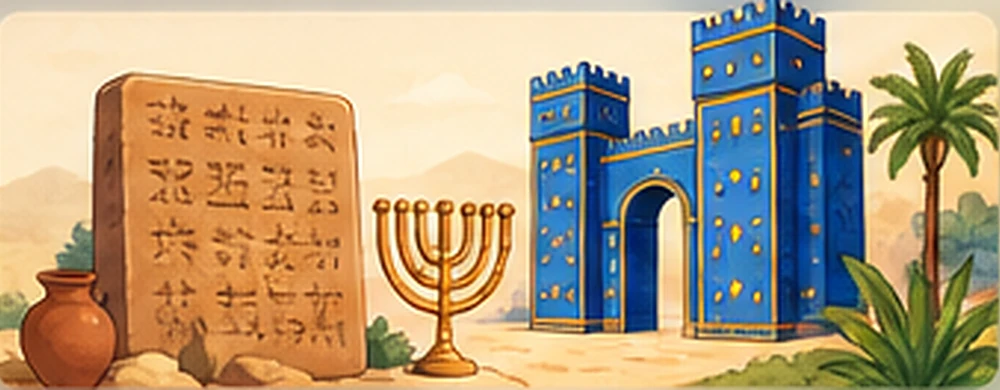
On 11 August 2026, we focused on Moses/Musa in the Quran and on Muslim–Jewish religious kinship within the wider Abrahamic story. Moses became our scriptural bridge between Islamic and Jewish memory.
Main idea
By foregrounding Moses, we show that Jewish sacred history is not outside Islamic consciousness; it is already present inside the Quranic story-world.
21 Aug 2026
On 21 August 2026, our Iraq work appeared in a Faith & Freedom News piece using the Isra and Mi’raj narrative to discuss Moses, prayer, mutual concern and Abrahamic cooperation.

Main idea
We read Moses advising Muhammad about prayer as a story of concern, counsel and mutual regard, and extend that lesson into civic coexistence.
Our recent reflections
Three themes at the heart of our Iraq message
Our recent public reflections return to three themes: the inward language of Sufism and Jewish spirituality, Moses as a Quranic bridge to Jewish memory, and the Mi’raj story as a lesson in compassion across prophetic communities. We use these themes to move from sacred memory toward civic peace.
Sufism, Jewish mysticism & the Abrahamic promise
In our 4 August reflection, we explored how Islamic Sufi thought and Jewish mystical traditions can meet around the inward life: purification, humility, remembrance, prayer, moral discipline and the search for closeness to God.
Purifying the inner life
We place self-discipline and purification of the heart at the center of spiritual maturity. The struggle against destructive desire becomes part of preparing the person for peace.
Heart and knowledge
Reason matters, but spiritual knowledge also requires inward transformation. We are interested in the language of wisdom that joins understanding with character.
Parallel spiritual languages
We compare themes such as contemplation, remembrance, retreat, devotion and divine love without claiming that Islamic and Jewish mysticism are identical.
The Abrahamic promise
We use Abrahamic language as a horizon of shared devotion to one God and shared moral responsibility — a basis for encounter without erasing difference.
What we take from this reflection
- Inner peace and public peace are connected
- Faith traditions can recognize familiar spiritual questions in one another
- Humility and purification can become civic virtues, not only private practices
- Iraq’s own Sufi and Jewish memories give this conversation a local historical resonance
Our civic reading: spiritual comparison matters when it helps believers approach one another with less fear, more humility and a stronger language for coexistence.
From inward discipline to civic peaceMoses, the Quran & the Abrahamic promise
In our 11 August reflection, we centered Moses/Musa to show how deeply Jewish prophetic memory already lives inside the Quranic narrative. We highlighted Moses as messenger, lawgiver, leader and servant of God — and used that shared reverence as a bridge between Muslims and Jews.
A Quranic bridge
We emphasize the exceptional prominence of Moses in the Quran. Muslim readers encounter his story repeatedly through revelation, struggle, law, patience and leadership.
Memory shared across faiths
The same Moses who stands at the center of Jewish sacred history is honored within Islam. That overlap gives dialogue a scriptural foundation already familiar to both communities.
Freedom and moral courage
We read the confrontation with Pharaoh as a story about resisting tyranny, enduring hardship and remaining faithful under pressure.
Abrahamic kinship
We place the stories of Isaac and Ishmael within the wider family of Abraham and use that memory to argue that inherited political conflict need not become permanent religious hatred.
What we take from this reflection
- Moses is not a foreign figure to Islamic consciousness
- The Quran itself keeps Israelite prophetic history inside Muslim sacred memory
- Shared prophets allow us to begin dialogue from familiarity rather than suspicion
- We distinguish between political disagreement and religious dehumanization
Our civic reading: when Muslims rediscover how much of Jewish prophetic memory is already present in the Quran, the religious imagination can make more room for human encounter.
A shared prophet, two living memoriesPrayer, Mi’raj & Moses
In our 21 August reflection, we revisited the well-known Islamic Mi’raj narration in which Moses repeatedly advises Muhammad to seek an easing of the daily prayers until five remain. We read the encounter as a story of compassion, counsel and concern across prophetic communities.
Concern for another community
Moses is portrayed as caring about the burden carried by Muhammad’s community. For us, this is a striking sacred image of responsibility extending beyond one’s own community.
Prayer and mercy
The story connects worship with mercy. Religious discipline is not presented as cruelty; the narrative includes compassion for human capacity and daily life.
One source, distinct paths
We speak of continuity among the prophetic messages while recognizing that religious laws and traditions are not identical. Shared origin does not require uniformity.
From counsel to cooperation
We extend the image of prophetic counsel into civic life: communities can advise, protect, listen to and cooperate with one another without surrendering identity.
What we take from this reflection
- The Mi’raj places Moses inside a formative Islamic story about prayer
- Compassion can cross the boundaries of prophetic communities
- Difference in religious law does not cancel shared moral responsibility
- Abrahamic peace can be spiritual, civic and diplomatic at the same time
Our civic reading: Abrahamic peace is more than a political formula. We understand it as a space for dialogue, religious dignity, cooperation and the rejection of hatred, coercion and violence.
Sacred counsel as a model of careOur public position
Building a civic pathway toward regional peace
Our work brings together dialogue, education, religious reflection, international outreach and people-to-people engagement. We see the Abraham Accords as a regional opening, and our role is to build the human relationships, cultural understanding and civic connections that can help Iraq participate in a wider future of cooperation.
Dialogue creates the human infrastructure for peace
Formal diplomacy matters, but lasting regional change also requires trust, relationships, cultural understanding and space for people to imagine cooperation before it becomes official policy.
Keep the Iraqi voice inside the regional conversation
We want Iraqi civic perspectives to be present wherever the future of Abrahamic cooperation, regional peace and Iraq’s relationship with its neighbors is being discussed.
The international room
Our international arm: The Virtual Embassy of Iraq in Israel
Our international arm is The Virtual Embassy of Iraq in Israel. Through it, we take our Iraq-rooted civic and Abrahamic work into the international room — where we engage diplomats, civil society, researchers, educators, diaspora communities and regional peace networks.
∞From Iraq to the International Room
Through our international arm, we open channels, create introductions, frame policy conversations, conduct multilingual public diplomacy and turn local dialogue into international relationships and future diplomatic possibilities.
Our work is independent and non-governmental, centered on civic diplomacy, Track II engagement, education, dialogue and international outreach.
Open channels
We seek direct conversations with diplomats, policy professionals, think tanks, civil-society leaders and institutions interested in Iraq, regional peace and people-to-people diplomacy.
Build dialogue beyond formal channels
We create space for unofficial dialogue, relationship-building and serious policy conversation when formal Iraq–Israel diplomacy does not exist.
Build a wider network
We connect our Iraq work with international interfaith networks, educational institutions, peacebuilding organizations, researchers and civic initiatives.
Carry Iraq’s civic peace message internationally
In English, Arabic and Hebrew, we translate Iraq-rooted civic ideas into international language through explainers, briefings, learning resources and public communication.
Build bridges through Iraqi Jewish heritage
We use heritage — especially the long history of Jewish life in Iraq — as a human bridge linking Iraq, Israel and Iraqi communities abroad.
Bring Iraqi voices into regional conversations
Our international room supports briefings, roundtables, policy exchange and conversations about regional cooperation, civic peace and Iraq’s future external relationships.
A two-way bridge between Iraq and the international community
We want Iraqi civic perspectives to reach international institutions, while relationships, knowledge and opportunities from the international room flow back into constructive engagement connected to Iraq.
Our International Room agenda
Create relationships and understanding before governments are ready or able to establish official channels.
Use Iraq’s Jewish heritage and plural history to restore human context to modern regional relationships.
Put education, culture, water, innovation, interfaith dialogue and civil society on the table as practical fields for future cooperation.
Ensure international discussion about Iraq and Abrahamic cooperation includes Iraqi civic perspectives rather than speaking only about Iraq from outside.
The international room is our diplomatic workspace: the place where our Iraq-focused civic work meets diplomats, international institutions, civil society, diaspora communities and regional peace networks.
Iraq legal context
Our work and Iraq’s current legal context
Iraq’s Law No. 1 of 2022 criminalizes normalization with Israel. This law shapes the political and legal environment in which our Iraq-related peace and dialogue work exists. We do not present this guide as legal advice; anyone assessing personal legal exposure should consult the latest official Iraqi text and qualified counsel.
Continue exploring
Explore the wider Abrahamic vision
Continue from our Iraq program into four connected parts of our wider work: learning, Abraham Accords diplomacy, Iraqi civic peace and shared heritage.
01Learning Center
The Learning Center
Return to the full learning hub for shared history, diplomacy, heritage and civic education.
Open The Learning Center →↗02Abraham AccordsThe Abraham Accords
Explore the agreements, participating countries, timeline and possibilities for regional cooperation.
Open the interactive guide →↗03Civic diplomacyAn Iraqi voice for Abrahamic peace
Read our long-form perspective on Iraqi civic engagement, dialogue and the path toward Abrahamic peace.
Read the analysis →↗04Shared heritageIraqi Jewish Heritage
Explore the people, places, traditions and stories that connect centuries of Jewish life in Iraq to the region today.
Explore the heritage archive →↗